NEWS
Oct 6, 2026
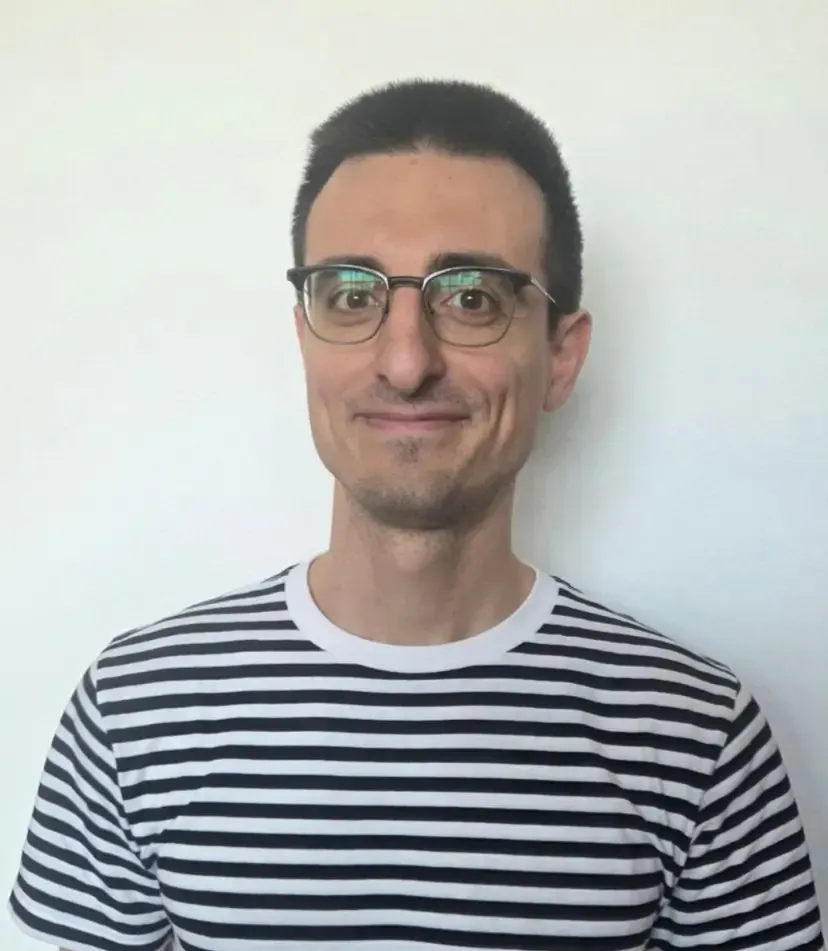
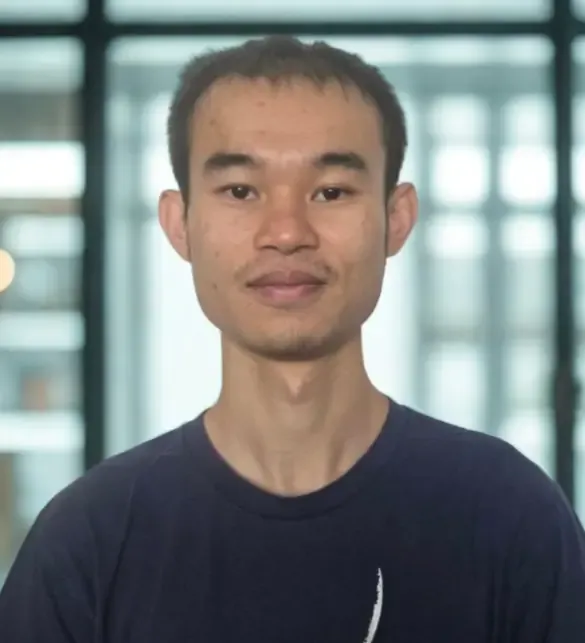
The EUCENTRAL team has grown. This month, two new researchers joined CFT PAN, and we are delighted to welcome them.
Dr Federico Balducci is the Team Leader of the Modelling Center for Quantum Technologies, a research group developing advanced methods for the description and engineering of open quantum many-body systems. Together with the ERA Chair Holder, he leads WP7 and WP8.
Dr Zejian Li is responsible for developing variational multi-configurational methods for boson and spin lattices, adapting codes for broader use and preparing tutorials for software that solves many-body quantum problems. He will also support project-related dissemination of numerical methods.
We wish both of them fruitful research and look forward to following the results of their work!
Oct 2, 2026
A new film about the EUCENTRAL project is now live on our channel.
The Centre for Theoretical Physics, Polish Academy of Sciences (CTP PAS) is building new capabilities in quantum technologies in Warsaw. Under the EUCENTRAL project, funded by the European Union through Horizon Europe (ERA Chairs), the Centre is establishing a new research team and involving scientists and experts from leading European institutions.
One of the project's first outcomes is an open software platform being developed at CTP PAS for modelling quantum systems, including numerical methods for studying many-body and open quantum systems. This work is carried out by the new Modelling Center for Quantum Technologies research group.
The ERA Chair Holder for the project is Prof. Marzena Szymańska of University College London.
EUCENTRAL forms part of CTP PAS's wider strategy - the next step is the creation of a Centre of Excellence dedicated to quantum technologies.
Aug 27, 2026
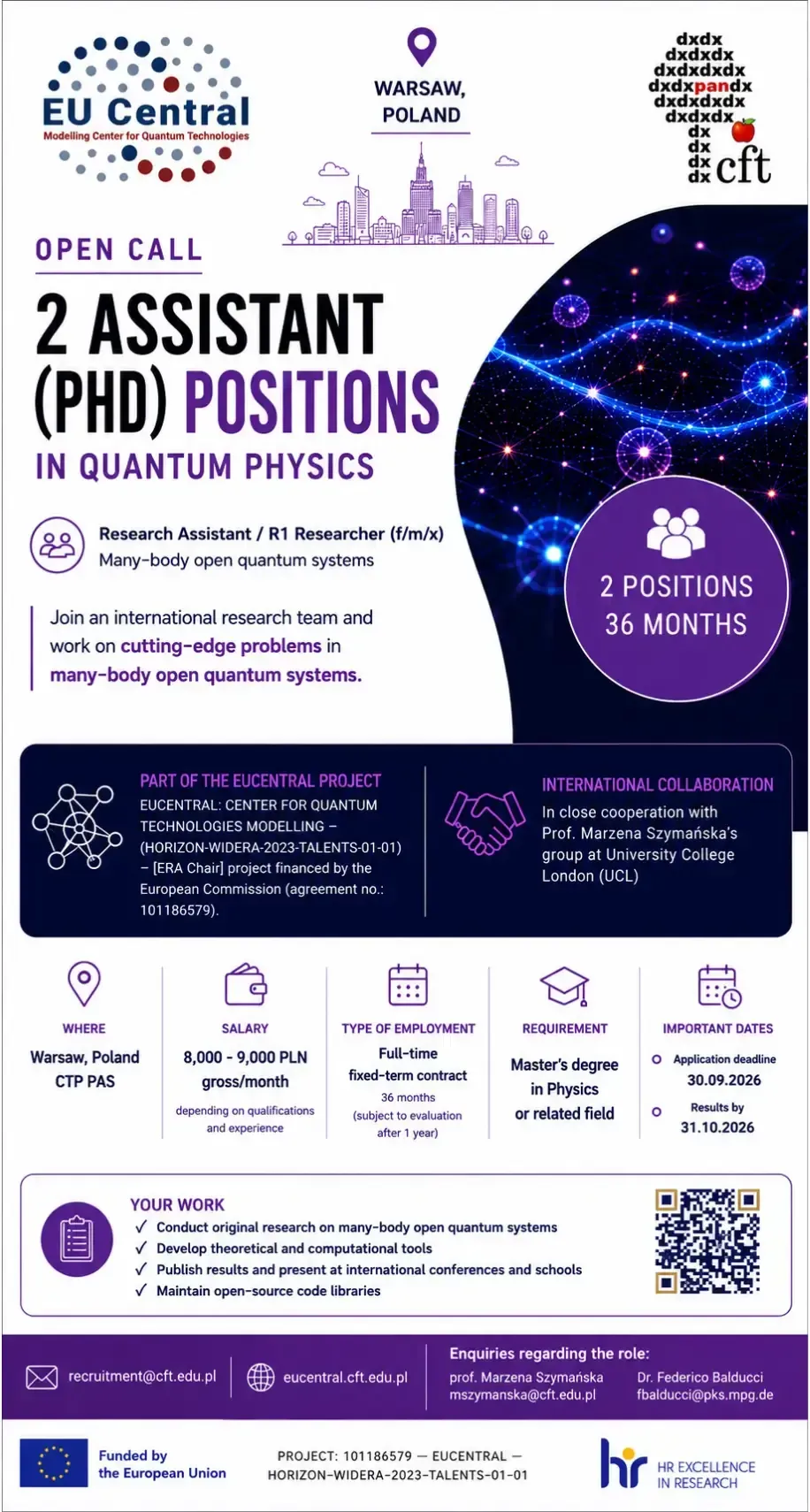
The Center for Theoretical Physics PAS is recruiting 2 Research Assistants / PhD Candidates (R1 Researchers) within the EUCENTRAL – Center for Quantum Technologies Modelling project.
We are looking for candidates interested in many-body open quantum systems, combining theoretical and computational approaches.
The PhD candidates will join the research group led by Dr Federico Balducci (Team Leader) within EUCENTRAL, under the scientific leadership of Prof. Marzena Szymańska (ERA Chair Holder). The project also offers opportunities for close scientific collaboration with University College London (UCL).
📍Warsaw, Poland
🔹2 positions
🔹36-month contract
🔹PLN 8,000–9,000 gross/month
🔹Starting date: from 1 November 2026
📅Application deadline: 30 September 2026
👉Full job description, requirements and application details:
EURAXESS – view the full offer
Jul 15, 2026
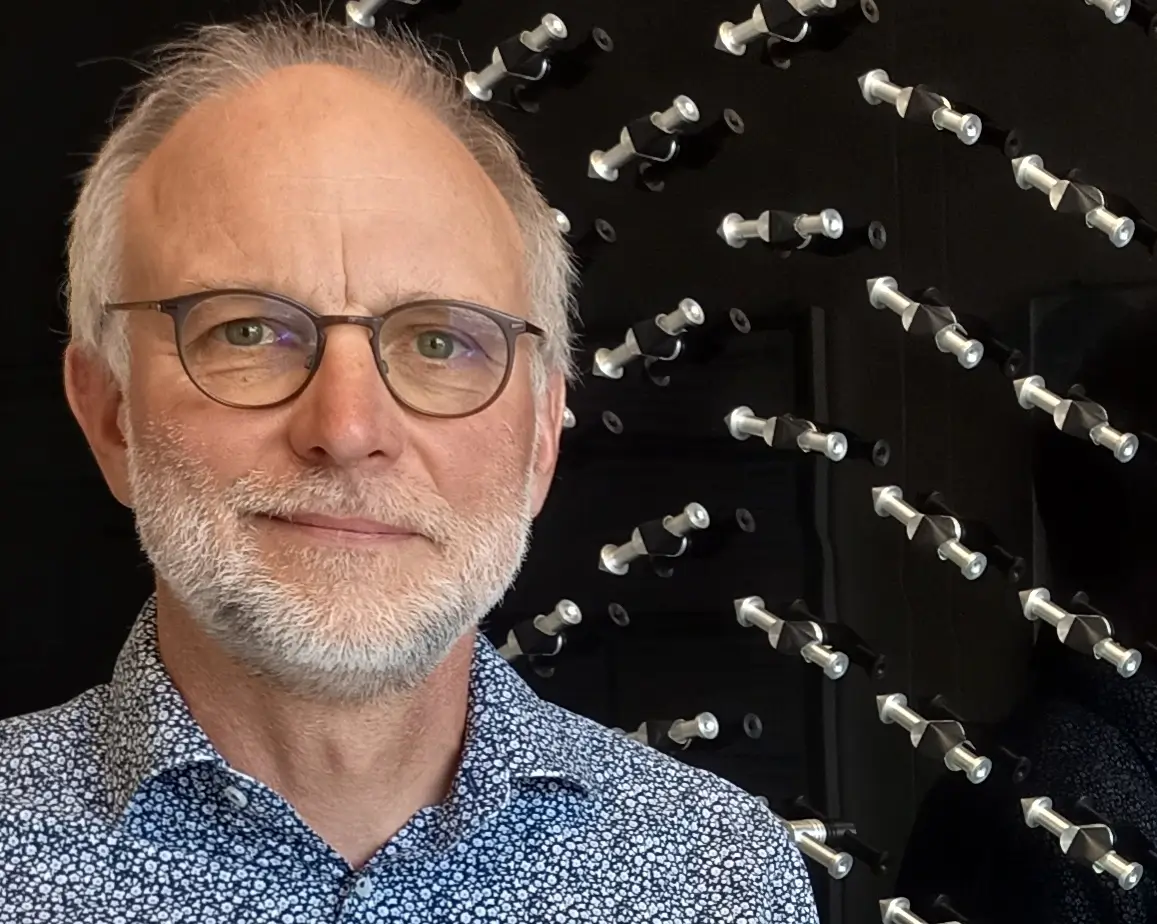
Prof. Tilman Pfau Elected Foreign Member of the Polish Academy of Sciences
On the second day of the 156th Session of the General Assembly of the Polish Academy of Sciences, held on 26 June 2026, Prof. Tilman Pfau of the University of Stuttgart was elected a Foreign Member of PAA in Division III: Mathematics, Physics, Chemistry and Earth Sciences. This year's election process saw 86 candidates put forward, from which the divisions of PAS ultimately selected 66 new foreign members - one of the highest honours the Polish Academy of Sciences bestows on researchers from abroad.
Prof. Pfau's candidacy was put forward by the Scientific Council of the Centre for Theoretical Physics of the Polish Academy of Sciences (CTP PAS) - making this honour particularly significant for our institute.
Scientific profile
Prof. Tilman Pfau is the founding director of the 5th Institute of Physics at the University of Stuttgart and executive director of the Carl Zeiss Foundation Centre for Quantum Photonics. He is one of the leading experimental physicists of our time, and his research on Rydberg atoms has been instrumental in the development of quantum simulators and quantum computers. His pioneering work has made a lasting contribution to atomic, molecular and optical physics, significantly advancing knowledge in these fields. Among his most notable achievements are the discovery of quantum droplets and so-called "trilobite" molecules, as well as the first observation of the supersolid state of matter. His scientific achievements have been recognised with, among others, the Herbert P. Broida Prize of the American Physical Society and ERC Advanced Grants from the European Research Council. In electing him, the Academy recognised not only his research achievements but also his long-standing commitment to international collaboration and to physics education and science outreach.
Significance for CFT PAN
Prof. Pfau's election as a Foreign Member of PAS confirms his close, long-standing ties with the Centre for Theoretical Physics of the Polish Academy of Sciences. He currently serves as Vice Chairman of the International Scientific Advisory Board of the Centre for Quantum-Enabled Computing (C4QEC), based at CTP PAS, and is a partner in the European project Teaming for Excellence ("Quantum Research and Applied Knowledge"), which aims to develop CTP PAS into a Centre of Excellence.
This election also confirms the long-standing, close scientific ties between the University of Stuttgart and CTP PAS. An earlier, visible symbol of this connection was the honorary doctorate awarded in 2014 by the University of Stuttgart to the renowned Polish theoretical physicist Prof. Kazimierz Rzążewski, a member of PAS, who has shaped atomic and quantum physics for decades and played a decisive role in fostering scientific exchange between Poland and Germany.
As part of the EUCENTRAL project, Prof. Tilman Pfau delivered a public lecture at the Copernicus Science Centre in May 2026, entitled "Relationship Issues and how to solve them in the quantum world", devoted to the phenomena that occur in matter at temperatures close to absolute zero. The Professor explained how, at extremely low temperatures, atoms form entirely new types of bonds not found in standard chemistry textbooks - weak, yet reaching over very long distances - and how long such exotic systems remain stable. He also discussed the superposition of bound and unbound states in quantum mechanics. The event was held in collaboration with the Copernicus Science Centre, and the recording is available below.
Jun 24, 2026
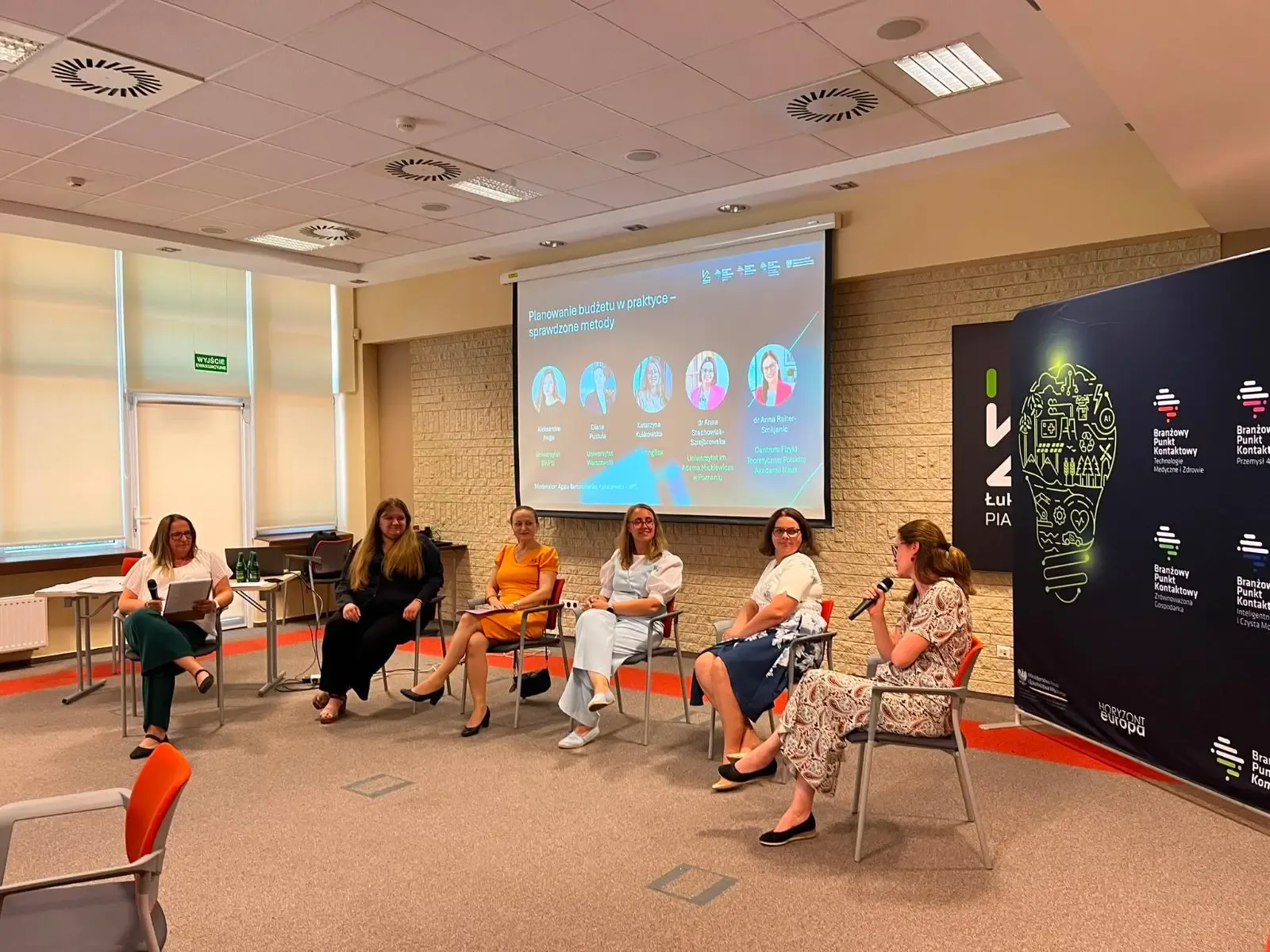
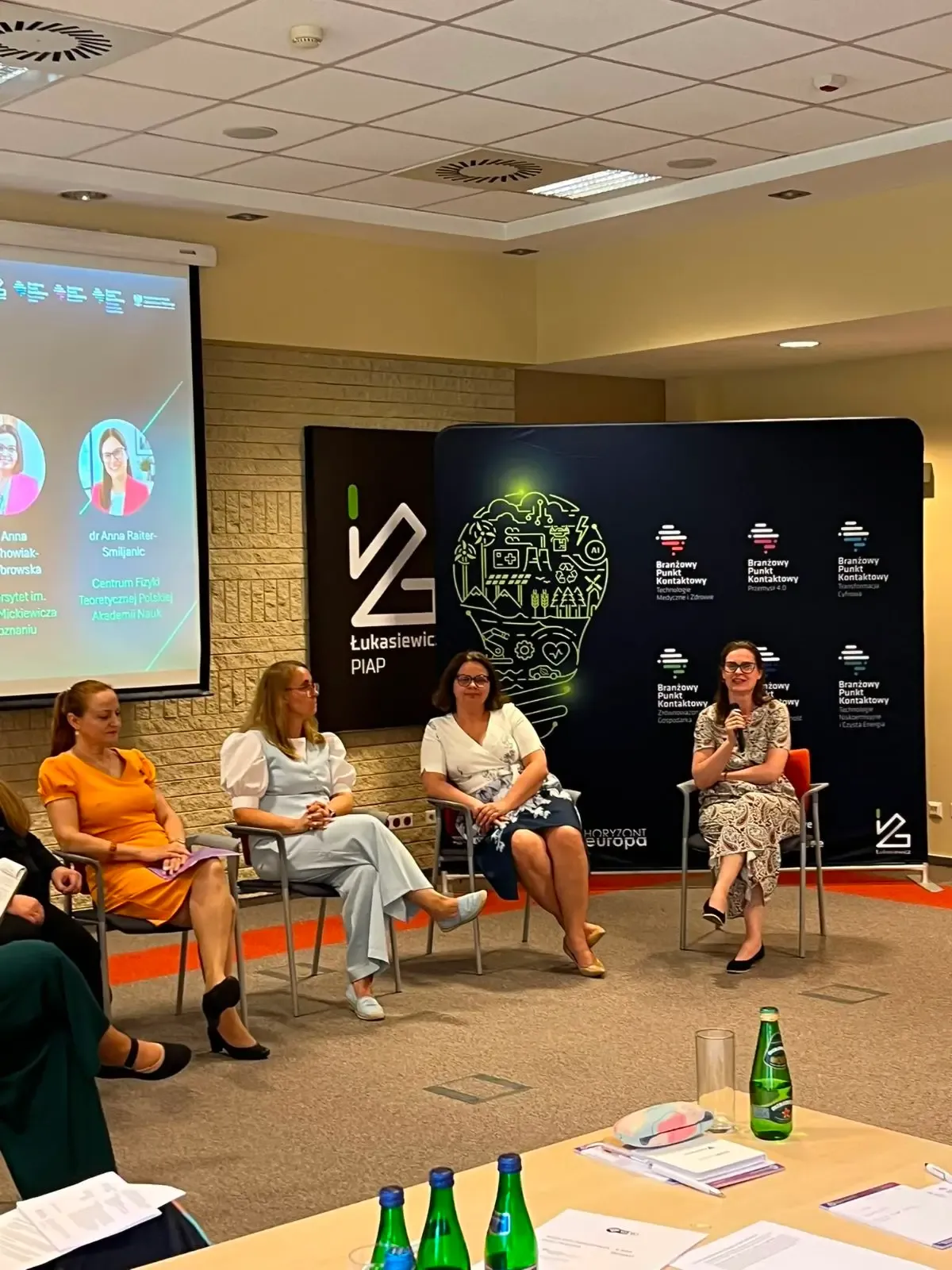
We're delighted to share insights from the practical workshop on implementing Horizon Europe projects, where Anna Raiter-Smiljanic from our team participated alongside practitioners and experts from Poland's research and business sectors. The event, organised by the Branżowy Punkt Kontaktowy Przemysł 4.0 in collaboration with Branżowy Punkt Kontaktowy BGK Energia, brought together a diverse group of institutions committed to European-funded research and innovation.
For the EUCENTRAL Project funded under hasztag#HorizonEurope, this workshop proved particularly relevant. Building and maintaining effective cross-border partnerships, managing communication in dispersed teams, handling project amendments, and ensuring financial compliance from implementation through audit are all challenges we are actively dealing with in our project, making them particularly relevant to discuss. Anna shared our experiences alongside colleagues from across Polish academia and industry.
The discussions covered essential themes - from consortium building and partner verification, through strategic communication and change management, to budget planning and financial governance. These aren't abstract principles for us; they're practical realities we address daily. What struck us most was how universal these challenges are across different sectors and project types, and how valuable peer-to-peer learning becomes when navigating complex, multi-partner European initiatives.
To colleagues considering or currently managing Horizon Europe projects: if you're building consortia or scaling research collaborations, this type of knowledge exchange is invaluable. We're grateful to have contributed our perspective.
Jun 2, 2026
An incredibly intensive and, above all, inspiring few days are behind us!
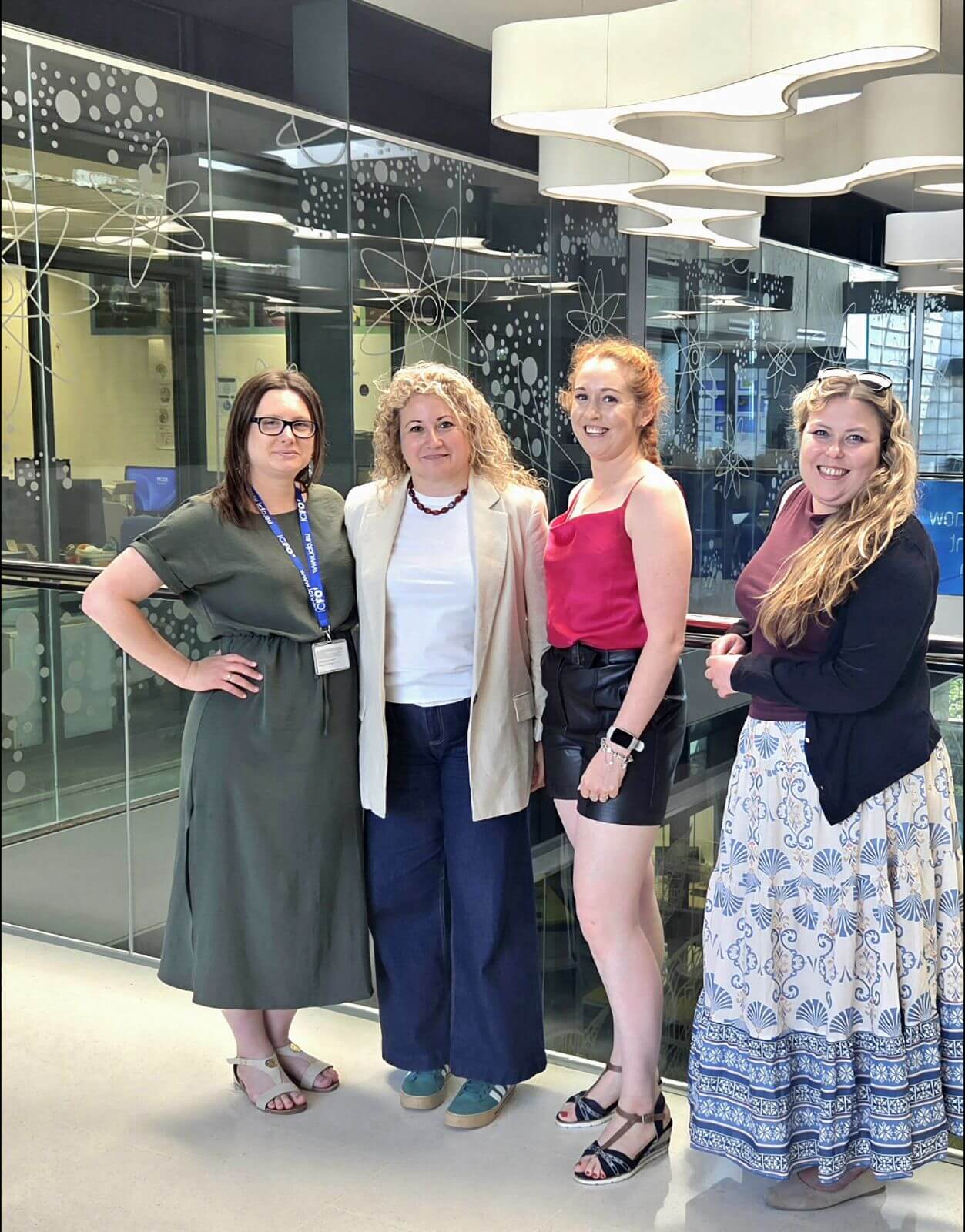
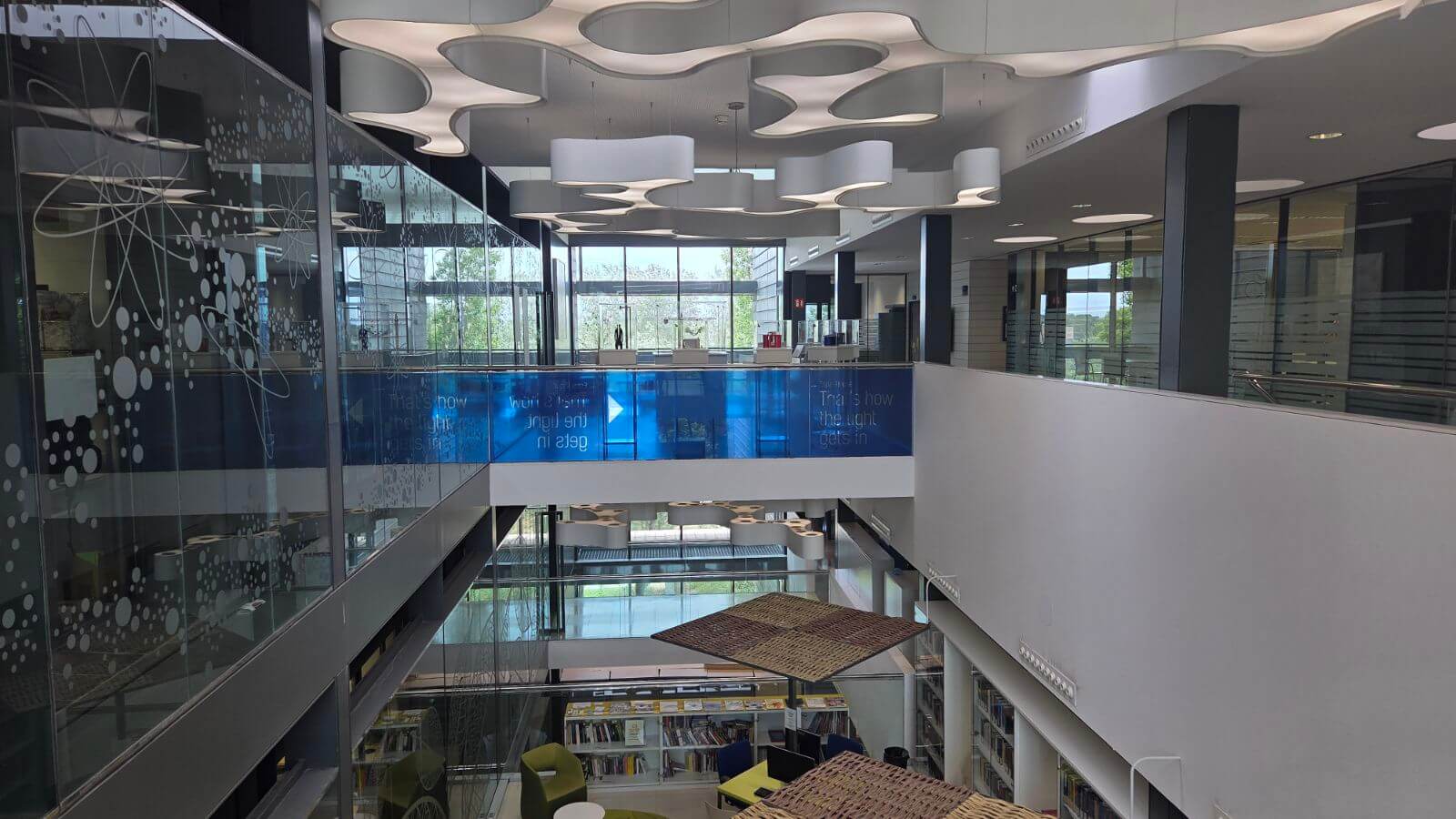
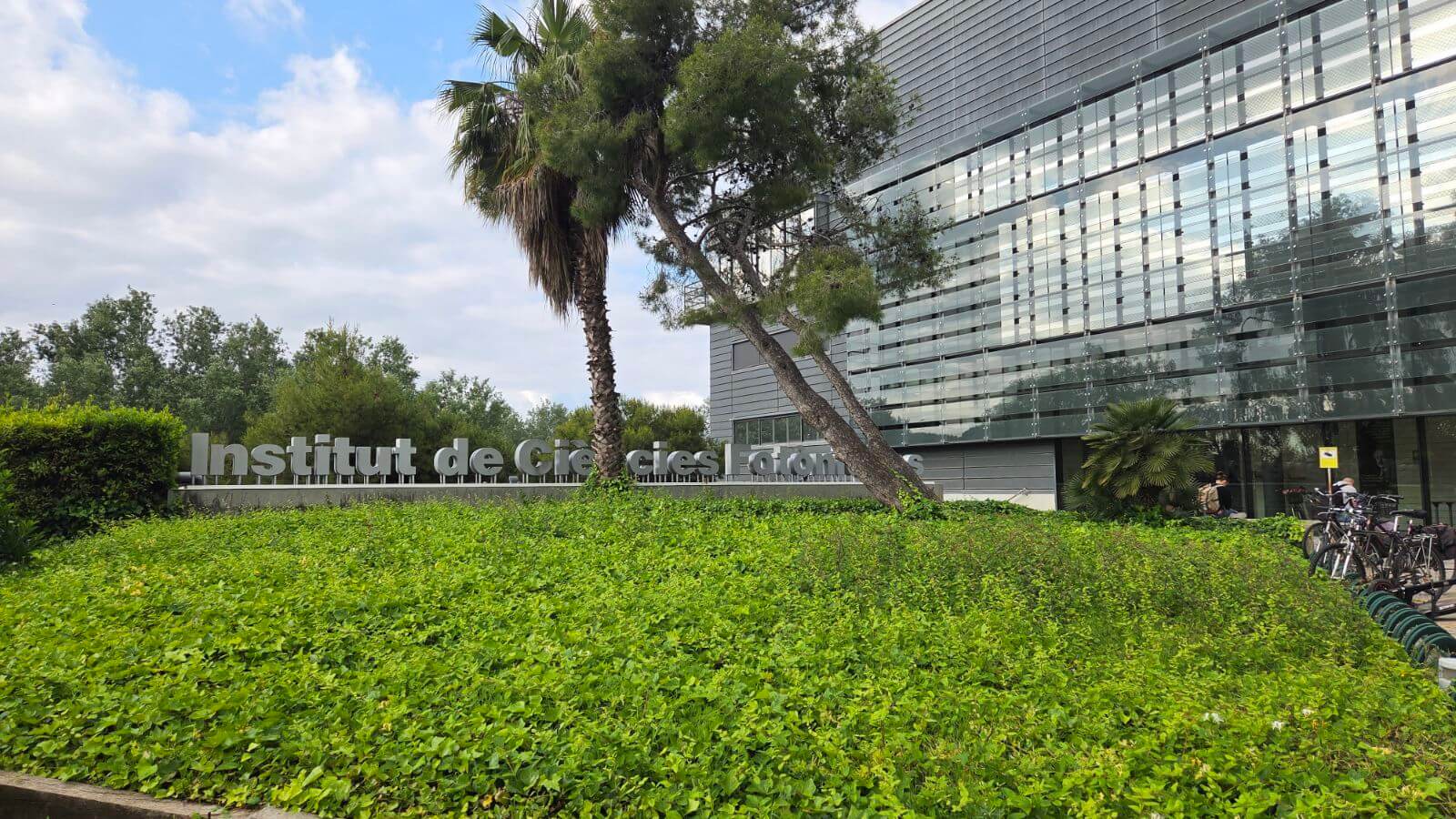
At the end of May, a delegation from the Center for Theoretical Physics of the Polish Academy of Sciences (CTP PAS), as part of the Eucentral Project, had the great pleasure of visiting ICFO in Castelldefels near Barcelona.
It was an engaging time, filled with high-level substantive discussions. We would like to sincerely thank the entire ICFO team for their time and exceptional hospitality.
A series of meetings dedicated to talent management, onboarding processes, as well as science communication and outreach activities, provided us with a wealth of valuable knowledge. We highly appreciate our partners' openness and willingness to share practical, proven solutions.
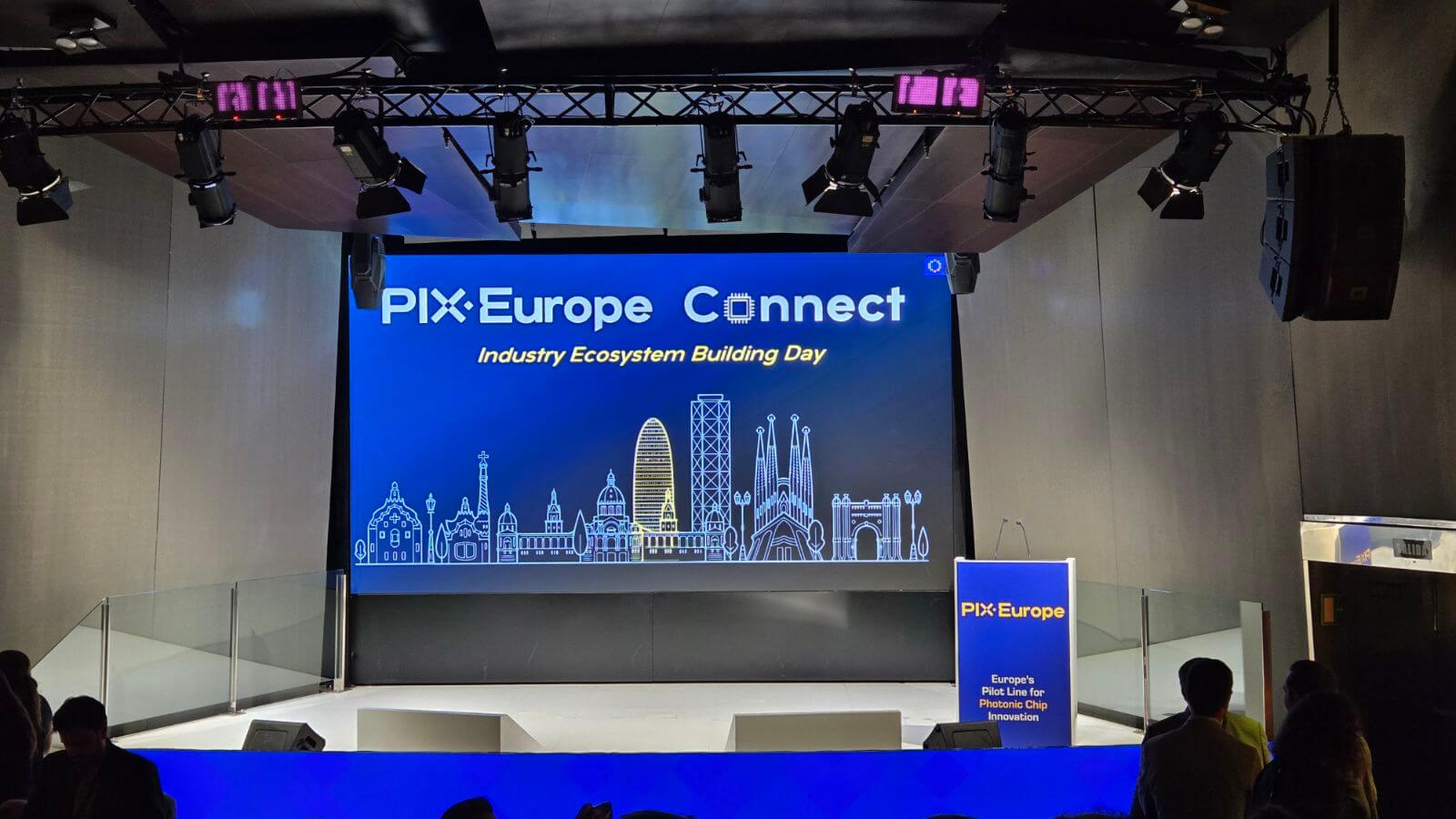
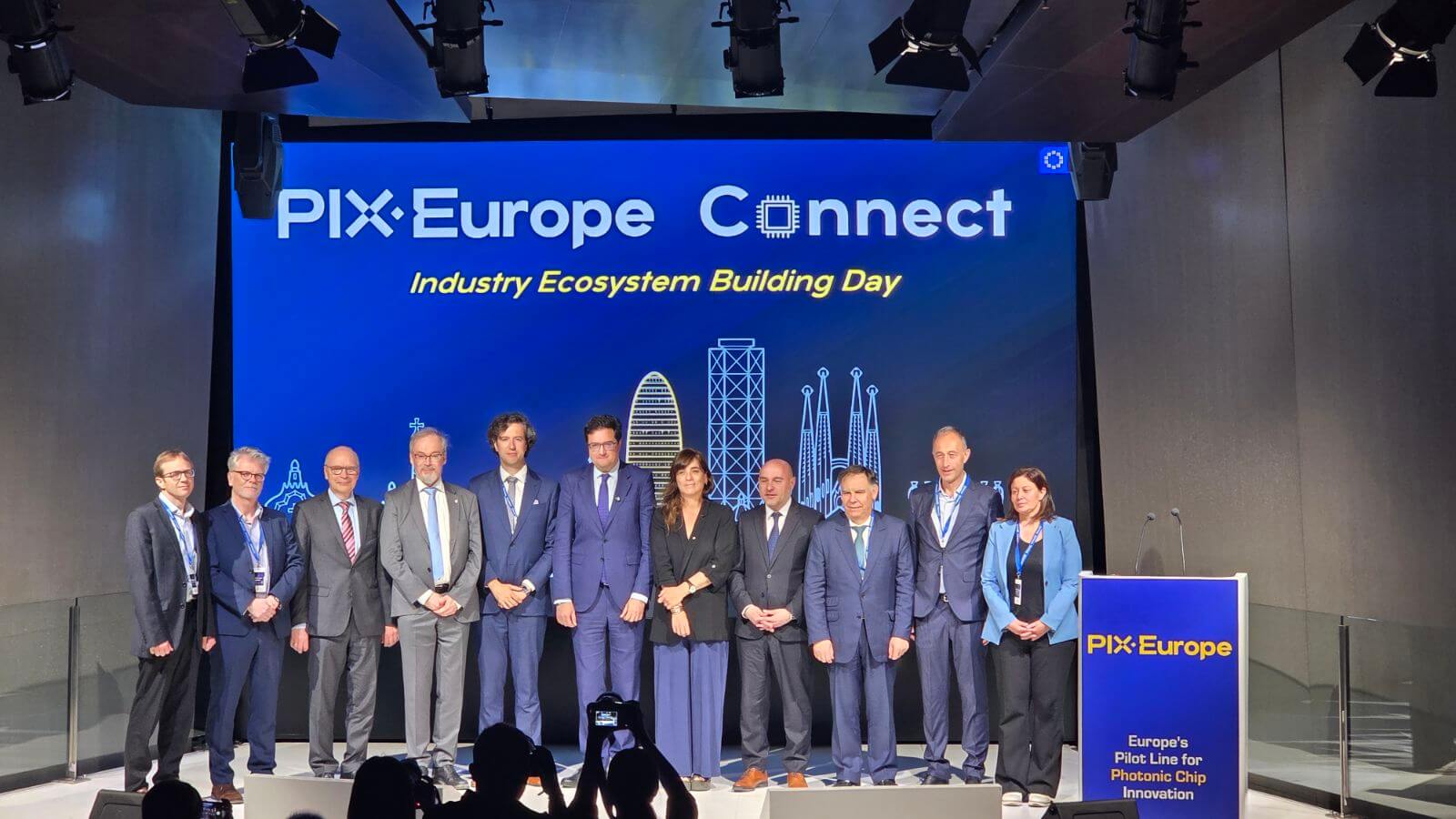
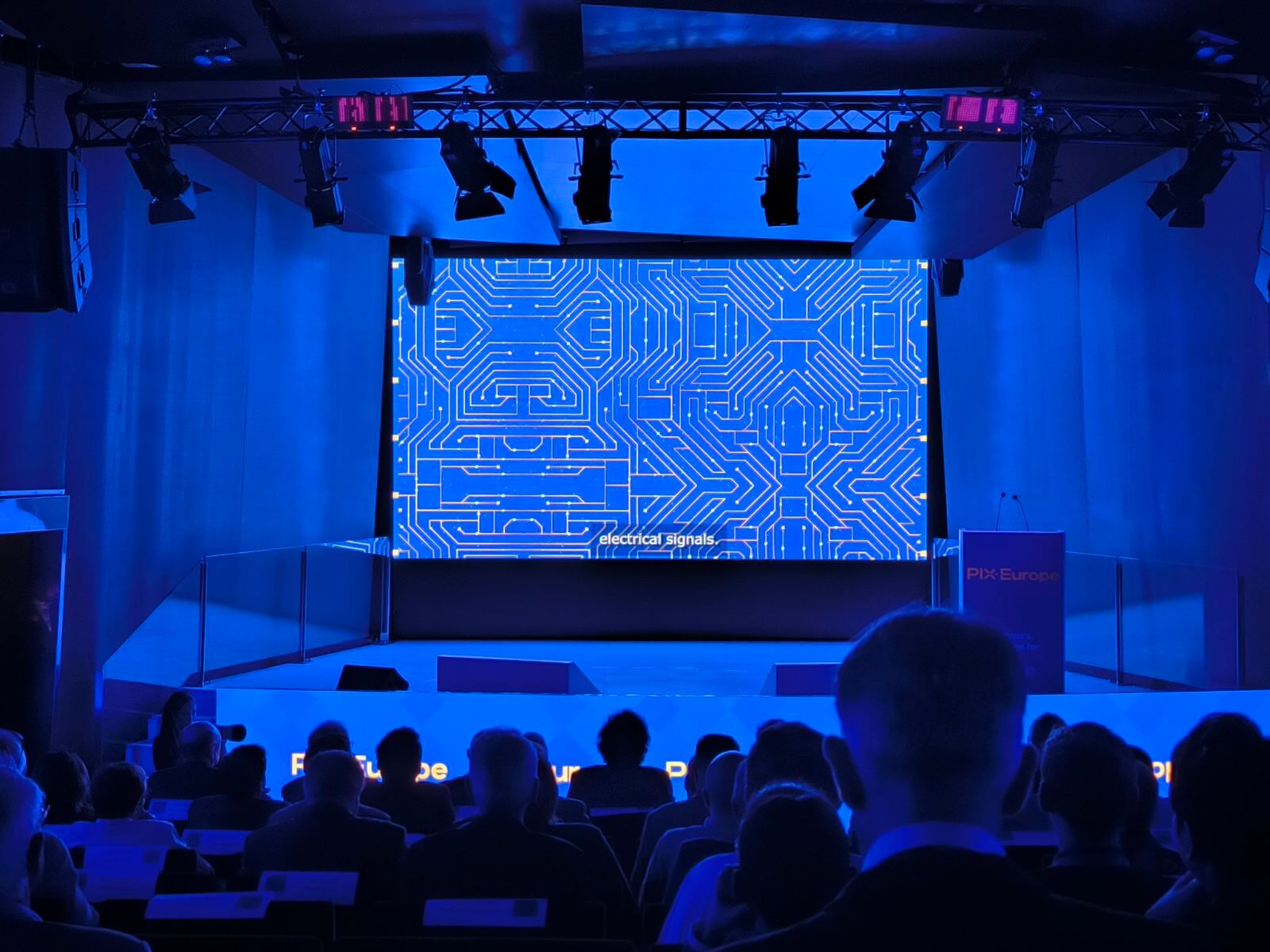
Additionally, on the final day, we had the opportunity to attend the official kick-off of the PixEurope Connect project. We are delighted that our visit coincided with such an important event. The launch of the project brought together many distinguished guests, including representatives of the Government of Catalonia, and the inauguration itself was not only professionally organized but also a highly inspiring gathering.
We thank the entire ICFO team for the collaborative atmosphere, valuable discussions, and time spent together. This visit has been a tremendous inspiration for the further development of our own structures.

May 12, 2026
We're looking for quantum physics enthusiasts to join the international EUCENTRAL Project. This is an opportunity for scientific development at a research institute and international collaboration.
We've opened recruitment for 4 positions:
2 x Research Assistant / PhD Candidate (R1)
Requirements: Master's degree in physics or related field, strong background in quantum statistical mechanics and many-body theory, programming skills
Salary: 8,000–8,900 PLN gross
2 x Postdoc / Adiunkt (R2)
Requirements: PhD in quantum physics, condensed matter physics or related field, experience in numerical computations
Salary: 10,000–10,500 PLN gross
Responsibilities:
Conducting original research on many-body open quantum systems, developing theoretical and computational tools, preparing publications, participating in international conferences. Work in the Modelling
Centre for Quantum Technologies group led by Dr Federico Balducci, in collaboration with Prof. Marzena Szymańska from University College London.
What we offer:
A scientifically stimulating research environment, flexible working hours, career development support, diverse and inclusive culture where mutual support, teamwork and respect are highly valued, benefits (Multisport card subsidy, holiday subsidy, nursery and kindergarten subsidy).
Applications accepted until 30 June 2026.
Feb 16, 2026
We invite you to explore our latest research papers, now available on our website:
"Efficient Time Evolution of 2D Open-Quantum Lattice Models with Long-Range Interactions using Tensor Networks"
This paper describes how large two-dimensional arrays of long-range interacting quantum mechanical objects can be simulated using tensor network techniques, a powerful class of numerical methods. The method described is then applied to systems similar to those used in state-of-the-art atomic quantum computers.
"Antibunching in locally driven dissipative Lieb lattices"
We demonstrate how engineering specifically localised driving in dissipative Bose-Hubbard Lieb lattices can generate enhanced antibunching through a mechanism analogous to unconventional photon blockade. Our stochastic simulation results open new possibilities for engineering non-trivial quantum correlations in open lattice systems.
Find publications and details on our website. We encourage you to read the full papers!
Jan 15, 2026
One Year of EUCENTRAL!
In January 2025, we launched EUCENTRAL – an ambitious mission to build a modelling centre for quantum technologies in Warsaw. Time to look back at what we've achieved!
What have we accomplished in 12 months?
Project kick-off
We hit the ground running – our launch conference in March brought together about 80 guests from academia, industry and media. We launched eucentral.cft.edu.pl and kicked off our communications campaign
Growing team
Jack Dunham, Dawid Hryniuk and Alex Ferrier joined our research group. We built a support team with HR and PR specialists. We're developing open-source codes, example problems and tutorials available on GitHub
Exchanges and study visits
Our team explored best practices at UCL (twice!), ICFO in Barcelona and the University of Stuttgart. Topics? Recruitment, IP management, research commercialisation, outreach, support for international teams.
Building competences
Training sessions on commercialisation, guest lectures and schooling (Abbie Bray from UCL), sharing experiences at conferences, open lecture at CNK given by Artur Ekert
This is only the beginning. Ahead of us: new challenges, recruitment drives (we're currently looking for a Team Leader!), and most importantly – building something that will reshape the European quantum technologies landscape.
Thank you for your support and stay tuned!
Dec 3, 2025
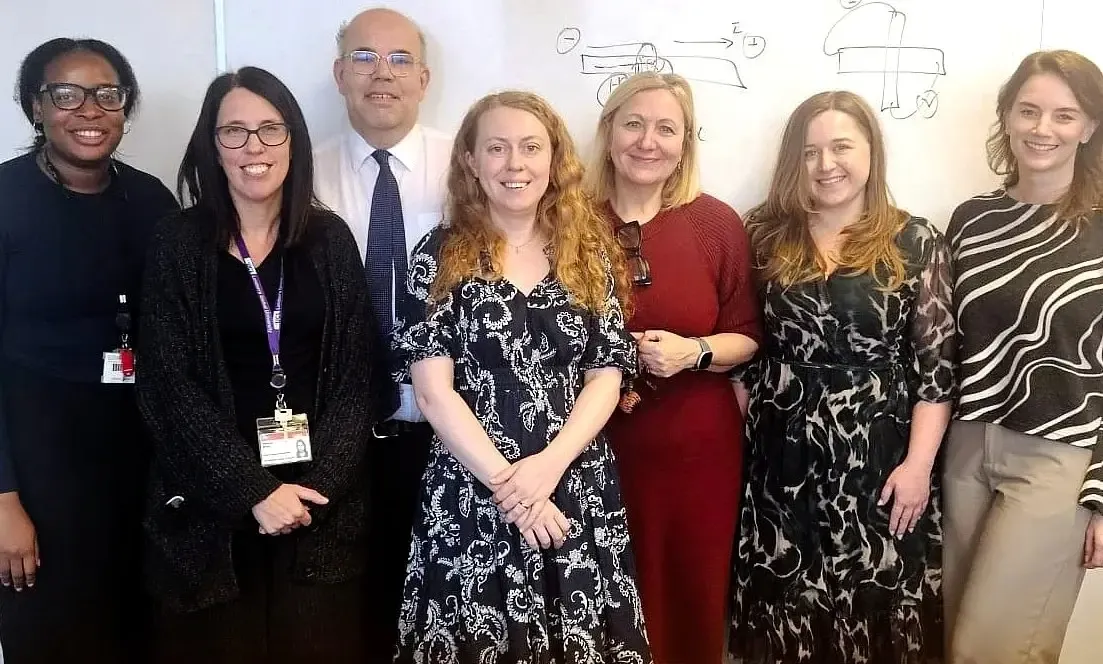
In November, our delegation (HR & Administration Specialist - Paulina Miziołek-Ambrożek and Administration Specialist - Katarzyna Rajewska) from the Center for Theoretical Physics of the Polish Academy of Sciences visited University College London, where we met with teams from the Department of Physics and Astronomy and the London Centre for Nanotechnology.
During our programme, we discussed recruitment procedures, best practices, work organisation, support for international staff, and onboarding processes. Thanks to the openness and hospitality of our hosts, we were able to learn about solutions implemented at one of Europe's leading research institutions and compare them with our own practices.
This was a valuable opportunity to exchange experiences that will help us better support our team and candidates applying to CTP PAS.
We thank our colleagues at UCL for the inspiring discussions and their willingness to share their expertise.
Load more